
Top Signs You Need Air Duct Cleaning Service – Don’t Ignore These
The signs that actually point to contaminated ducts are mechanical and behavioral, not cosmetic. If your system runs noticeably longer to reach the same setpoint than it did two years ago, if a smell appears only when the heat or AC kicks on, or if you’ve just finished a remodel, those are traceable clues coming from inside the air pathway. Dust sitting on the outside of a vent cover usually isn’t one of them. If you’d rather not spend a weekend guessing, call (866) 947-9113 for a straight answer.
Why dust on the vent cover is the weakest signal you can use
We get asked about dusty registers constantly, and the honest answer is that surface dust on a grille tells you almost nothing about the duct trunk behind it. That dust settles from the room itself: skin cells, fabric fibers, pet dander, cooking particles. It accumulates on a horizontal surface regardless of what’s happening inside the system. You can wipe a vent cover clean, watch it stay clean for weeks, and still have a duct run full of debris. Or you can have a spotless cover over a duct that needs attention. It’s a poor diagnostic.
What matters is what’s moving through the whole pathway, from the return grille through the trunk line, past the air handler, and out the supply branches. That’s the part you can’t see from the living room, and it’s the part professional-grade equipment is built to reach. The indicators below are worth more of your attention than anything sitting on the paint.
Your HVAC Runs Longer Than It Used to, and the Filter Is Clean
This is the single most useful sign, and almost nobody connects it to their ducts. Here’s the logic: if your furnace or air conditioner is taking noticeably longer to hit the thermostat setpoint than it did two years ago, and you’ve ruled out the filter, you’re looking at restricted airflow. Debris lining the inside of the duct walls narrows the pathway. The blower pushes against more resistance, moves less air, and the system cycles longer to do the same job.
Before you blame the ducts, check three things in order:
- The filter. A clogged filter is the most common cause of long runtimes. Replace it, then watch the next few cycles.
- The return grilles. Blocked or covered returns starve the system. Furniture, rugs and boxes in front of a return make the blower work harder.
- Room-by-room airflow. Hold your hand at each supply vent. Weak flow at the far end of a run, while the closest vents feel strong, points to restriction in the branch duct.
If the filter is fresh and the airflow still feels thin, duct buildup is the next suspect. A camera inspection settles it. In homes around Bountiful, we see this pattern most often in systems that haven’t had the trunk line touched in years, especially where a filter change schedule has slipped.
Smell Mapping: Match the Odor to the Cause Before You Clean
Smell is a precise diagnostic tool if you read it correctly, and a misleading one if you don’t. Different problems produce different odors at different times. Pay attention to when the smell appears and where it’s strongest, and you’ll narrow the cause quickly.
- Musty, damp, basement-like smell, strongest near the return or air handler. This points to biological growth near the air handler or inside the supply plenum, where condensation and cool surfaces create the right conditions. It usually gets worse when the AC runs.
- Dusty, slightly burnt smell the first few minutes the heat comes on. Dust and light debris settling on the heat exchanger burn off as it warms. It happens once per heating cycle, then fades. Persistent burnt smells are a different issue and warrant a technician’s eye on the heat exchanger itself.
- Sharp, localized odor from one or two vents. Pest activity in a specific branch duct. Droppings and nesting material produce this, and it tends to stay put rather than spread through the whole system.
Matching the smell to its source matters because each one calls for different treatment. A musty return-air smell needs more than a pass with a vacuum: it needs cleaning followed by sanitizing with something like Abatement Technologies or Guardsman products to address what’s living on the surfaces. A heat-on dust smell usually resolves with standard cleaning of the heat exchanger area and ductwork.
Post-Renovation Is an Automatic Cleaning Trigger
If you’ve just finished a remodel, stop reading signs and book the cleaning. Drywall dust, insulation fibers and construction debris get pulled into the return system the moment the HVAC runs during or after the work. Drywall dust is fine and alkaline, and it coats duct walls and settles into the blower and coil. It doesn’t blow through and disappear. It stays.
This applies regardless of how recently the system was last cleaned. A duct system cleaned a year before a kitchen remodel still needs attention after the remodel, because the remodel is the event that contaminated it. The same goes for demolition, floor refinishing, and any project that generated visible airborne dust. Our advice: run the system as little as possible during the work, cover the returns, and schedule cleaning once the dust settles and the project is done.
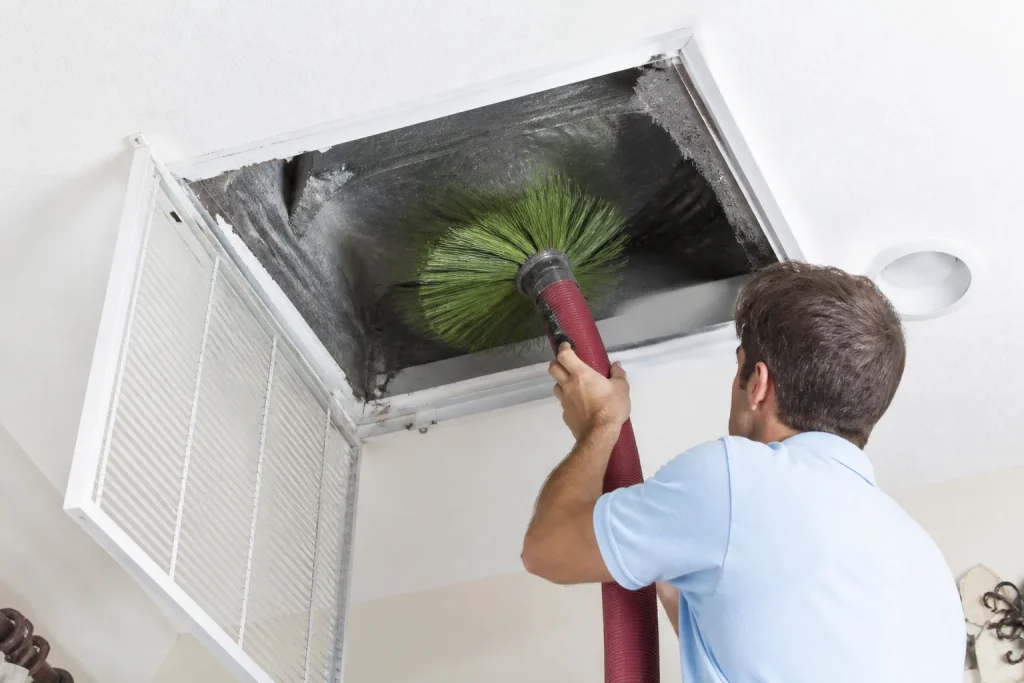
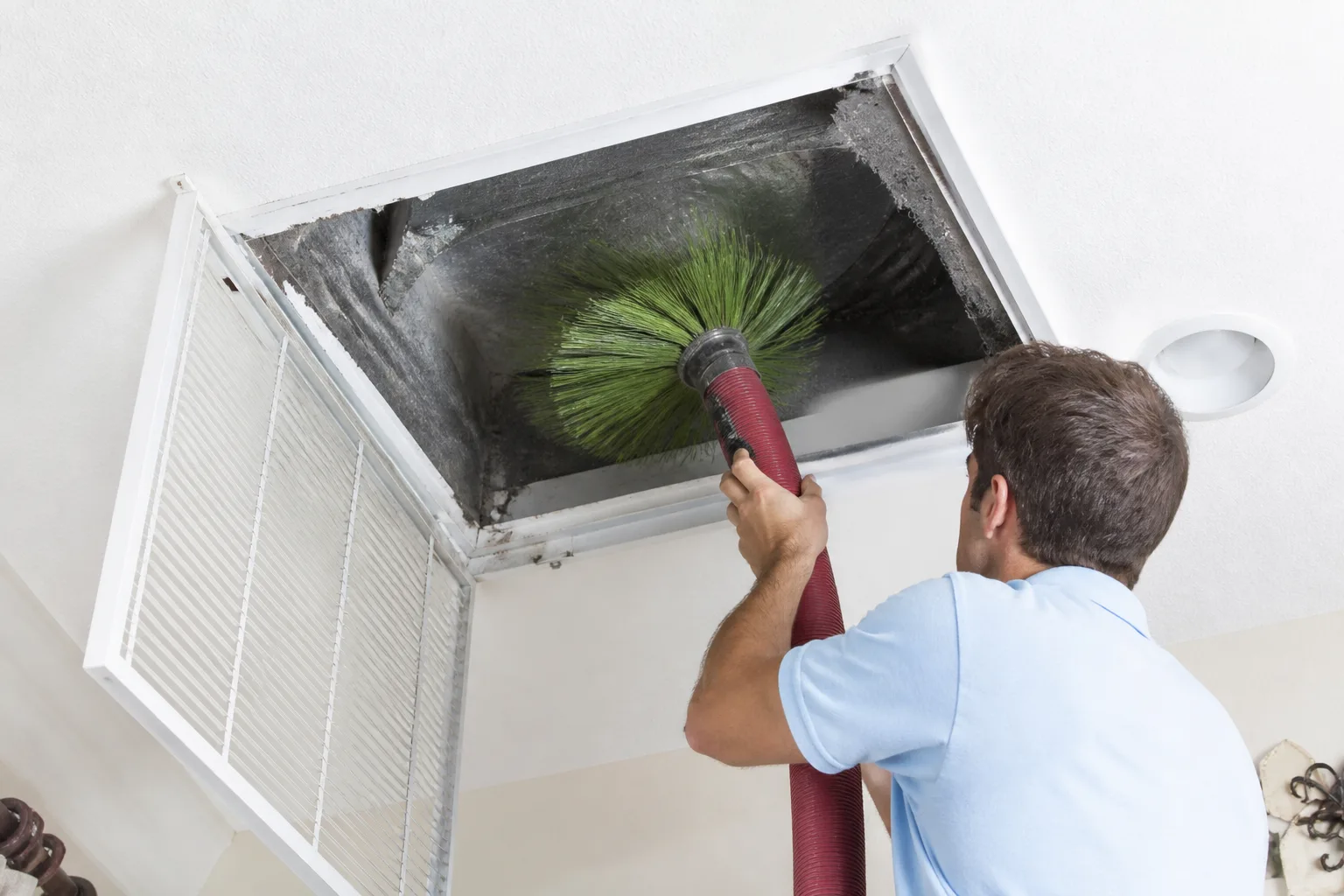
This is where full-pathway coverage separates a real job from a surface pass. The trunk lines need mechanical cleaning with a rotary brush system like Rotobrush, the air handler and coil need their own attention, and the supply branches need to be cleared individually. A quick vacuum at the registers misses most of what the remodel left behind.
The New-Home Exception: Debris Before Anyone Moves In
New construction creates its own version of this problem. During the build, the duct system is open while drywall is cut, sanded and finished. Sawdust, drywall particles, insulation scraps and miscellaneous construction debris end up in the ductwork before the system has ever run for a homeowner. The house is brand new and the ducts may already need cleaning.
For new homes in the Bountiful area’s newer developments, we recommend air duct cleaning before move-in rather than after. Cleaning an empty house is simpler than cleaning a furnished one, and it means the first air your family breathes in the new place isn’t the first air that’s ever passed through those ducts. Pair it with a fresh filter and you’ve started the house off clean. It’s also the right moment to check the ductwork itself for gaps and poorly sealed joints, since new construction doesn’t guarantee airtight connections.
Visible Mold at a Supply Vent Means More Than Cleaning
If you see dark speckling or fuzzy patches around a supply vent, don’t treat it as a simple cleaning job. Visible mold at a register usually means moisture is present somewhere in the system, and cleaning without finding the moisture source just gives it a place to come back. It can also be misidentified. What looks like mold is sometimes dust darkened by humidity, sometimes paint overspray, sometimes the shadow of a poorly sealed gap letting attic air through.
What to do about it: get it inspected rather than wiped. A technician should look at the coil, the drain pan, the plenum and the insulation inside the duct to find where the moisture is coming from. If it is mold, treatment involves cleaning, sanitizing with restoration-grade products, and fixing the moisture issue. And sometimes the real fix is duct repair and sealing, because a leaking duct pulling humid air from an unconditioned space is the reason the growth started in the first place. Finding it and fixing it in one visit is the point.
When to call a pro
You can check filters, clear return grilles and hold a hand to vents yourself. What you can’t do is see inside the trunk line or confirm what’s growing on the coil. When the runtime has crept up, when a smell keeps coming back after a filter change, when you’ve finished a remodel, or when you spot something at a vent that might be mold, that’s the moment to bring in professional-grade equipment. Our technicians have up to 8 years of experience reading exactly these clues, and a camera inspection removes the guesswork.
The Bottom Line
The signs worth acting on are the ones with a traceable cause inside the system: longer runtimes with a clean filter, a smell you can map to a specific source, recent construction or renovation, a brand-new home, or anything at a vent that looks like growth. Dust on the covers is decoration, not diagnosis.
For a thorough job, expect a full-pathway approach: mechanical cleaning of the trunk and branches with Rotobrush and Nikro equipment, attention to the air handler, and sanitizing where the situation calls for it. If you’re in Bountiful and need help, Bountiful Air Duct Cleaning offers free estimates. Call (866) 947-9113. We answer 24/7. Fast dispatch from 7am to 7pm, Sunday through Friday.
Frequently Asked Questions
For most homes, every three to five years is a reasonable rhythm, but events matter more than the calendar. A remodel, a new build, water damage, or a pest problem resets the clock regardless of when the system was last cleaned. If you’ve had any of those, schedule it sooner rather than waiting out the interval.
Not definitely, but it’s a strong suspect. A clean filter plus long runtimes points to restricted airflow, and duct buildup is one of the primary causes. A camera inspection confirms whether the inside of the duct is the restriction before you spend anything on cleaning. Call (866) 947-9113 for an exact quote. Estimates are free.
It might be, or it might be darkened dust, paint overspray or attic air sneaking through a gap. That’s why it needs inspection rather than a wipe-down. If moisture is feeding growth inside the system, cleaning alone won’t solve it. The moisture source has to be found and fixed, and duct sealing is often part of that.
Often, yes. Construction debris, drywall dust and insulation fibers can end up in the ducts before the system has ever run. Cleaning before you move furniture in is easier and starts the home off clean. Homeowners can also learn more about Bountiful Air Duct Cleaning and our full indoor air approach. If you’re weighing a bundle of services, look at air duct cleaning, dryer vent cleaning, and HVAC cleaning to see what covers your situation.
Written by the team at Bountiful Air Duct Cleaning.
Need Air Duct Cleaning Help?
Call Bountiful Air Duct Cleaning - the local pro we connect you with is licensed and insured, with free written estimates in Bountiful.
(866) 947-9113